Dentistry: The intro


Dentistry is among the top paid and most sought after professional career paths in the 21st century. This website is going to inform you about the academic road to dentistry, the different fields dentists may specialize in, and the work environment and lifestyle as a dentist.As a dentist, you have flexible work hours, rare on-call hours, make good money, and get to feel a sense of satisfaction by helping people.
In this video, Dr. Brook Derenzy gives you just his view on why dentistry is a good field to work in. 


SCHOOLING: Lots and lots of it...
As medical professionals, dentists must go through rigorous amounts of schooling. After high school, you are required to finish at a four year college or university. In college, you must take classes required for your major (which can be anything of your interest) and also take the science courses required for dental school. There is no field that you MUST major in, but many pre-dentistry students choose to major in a science since these courses will work well with their major and dentistry pre-requisites. Here is a link to a sample curriculum required (in addition to your major and general education requirements) for acceptance into the Harvard University School of Dental Medicine. This is a valuable source in providing you with an idea of what to expect if you want to pursue a career in dentistry.
After completion of undergraduate education, you must go through an additional four years of Dental School. In dental school, you'll learn all the habits, skills, and trades required to practice as a general dentist. 

ADVANCED SCHOOLING BY SPECIALTY:
After dental school, you may choose to take further classes in a specialized area of dentistry if you wish. Here is a list of dental specialties and the advanced (post dental-school) education required.
1. Dental Public Health: 1-2 years 
2. Endodontics: 2-3 
3. Oral & Maxillofacial Pathology: 3 years
4. Oral & Maxillofacial Radiology: 3 years
5. Oral & Maxillofacial Surgery: 4-6 years
6. Orthodontics: 2-3 years
7. Pediatric Dentistry: 2-3 years
8. Periodontics: 3 years
9. Prosthodontics: 1-3
For further information regarding the description of these specialties and schooling, click here.

MONEY MONEY MONEY: How much do dentists make?
As a dentist, you are guaranteed a financially stable lifestyle. Dentists are among the top paid professional careers in 2012 and, just like with the schooling, the amount they get paid changes with specialty. According to a 2009 study performed by ADA (American Dental Association), the average net income was $192,680 for a general dentist and $305,820 for a specialist. The top paid (and requiring most education) dental specialty, oral surgery, hit a maximum net income of over $500,000 a year. 

General and Pediatric Dentistry

General/Family dentists are those that have not specialized in any specific field. These are the guys that you visit every six months for a visit. These dentists are trained to do a little bit of everything, but not to as high of a degree of knowledge as a dental specialized. After high school, you must complete four years of college education, taking the required science courses, and then take an additional for years of dental school. After school, you must take your board exams and get a license to practice general dentistry in your state of choosing. In addition to this schooling, dentists must be able able to socialize with patients in a way that makes them feel comfortable, since going to the dentist isn't exactly a happy time in everyones life. You need to be a social person that likes to interact with other people in a positive manner.
These dentists are trained to diagnose, prevent, and treat problems with teeth or oral tissue. General dentists remove decay, fill cavities, examine x-rays, straighten or repair fractured teeth, extract, perform corrective surgery, and much more. For the complete description and list of their duties, click here.


In this video, Dr. David Carr descibes the road to general dentistry and gives you a quick look into what life as a general dentist is like. Dr. Carr is a graduate of Baylor University School of Dentistry and has owned his own office for several years. He shows us the aspects of being a dentist: both medical and business related. In addition to your duties as a dentist, Dr. Carr emphasizes the importance of being a good business man - since most dentist up and run their own office.


Many of these general dentists may decide to work with just children - this field is called pediatric dentistry. After college, they are required to take the same four years in dental school as other dentist PLUS an additional 2-3 years of education in pediatric specialization. They perform many of the same procedures as general dentists, but work with a younger range of patients. Like other dentists, these dentists mostly work in their own private office or work with other dentists like them. The AAPD (American Academy of Pediatric Dentistry) is the leading organization in children's health and provides dentists with valuable resources for their career. Click here to learn more about pediatric dentistry and. As with general dentists, it is vital that you learn to interact with your patients. In pediatric dentistry, you need to learn how to talk to children and make them feel comfortable with coming to the dentist. Finding patients is not the only thing that matters in dentistry, you need to know how to make them happy and keep them as your patients in the future. In the video above, you see Dr. Lee Weinstein and how he creates a comfortable environment for children. Hotel key cards, post cards, license plates from all over the country, and  many other colorful items add to the look and feel of his office. You can see by his personality and speaking behaviors that he has learned how to properly interact and behave with children to make them feel comfortable and happy.

"Being able to help children overcome their fear of the dentist and to actually enjoy their visits with me is a great joy. I try to create an environment in my Scottsdale, Arizona (AZ) office that is both fun and relaxing while instilling great dental habits. This helps ensure that your children grow up with healthy teeth and bright smiles. As a pediatric dentist, I also get to act like a child. What’s most rewarding is playing with the kids, turning a difficult patient into a great one, and seeing the kids’ beautiful and happy smiles. My staff and I look forward to meeting you and your children soon!" - Dr. Lee Weinstein

Big Buck Dentistry - OMS

OMS (Oral & Maxillofacial Surgery) is the highest paid and most demanding dental specialty. They are part of the top three highest-paid professions, averaging at about $220,000 a year. These dentists are not only dentist, but also medical doctors with specialty. A minimum of twelve years (maximum 15) of post-high school education is required to become an OMS. In addition to four years of both college and dental school, you are required to complete a minimum of four years of hospital surgical residency. After this, all surgeons must pass a board exam and obtain a license to practice in the state of their choosing.
AAOMS (American Association of Oral & Maxilliofacial Surgeons) is the official website supporting the Association of Oral & Maxillofacial surgeons. Here, you will find information about the OMS specialty, organization information, online questionnaire and career enhancement resources. 


According to aaoms.org, OMS specialists "care for patients with problem wisdom teeth, facial pain, and misaligned jaws. They treat accident victims suffering facial injuries, place dental implants, care for patients with oral cancer, tumors and cysts of the jaws, and perform facial cosmetic surgery." An oral surgeon must have specialized knowledge in pain control and advanced training in anesthesia. They must be able to provide quality care with maximum ptient comfort and safety in the office setting. 

This video, produced by AAOMS, does a great job of describing Oral & Maxillofacial Surgery to the viewer. They describe the work conditions, the schooling required, the pros and cons, and overall lifestyle of an Oral & Maxillofacial surgeon. The video provides multiple examples of OMS procedures and shows before and after pictures of multiple different patients that have undergone reconstructive and cosmetic facial surgery.
The work conditions and hours tend to vary a lot and these surgeons are often on call for all hours of the day. This specialty does not support a leisurely and predictable lifestyle, but it extremely rewarding. The usual work setting is in a hospital or outpatient clinic. In extreme cases they can work over 80 hours per week. The work environment is indoors with temperatures in the operating room kept cool. In addition to emergency surgery, they also participate in corrective jaw surgery and a variety of reconstructive and cosmetic surgery. 


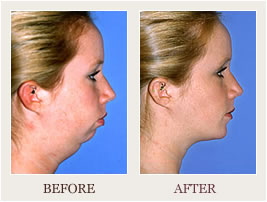
This is an example of the type of reconstructive and cosmetic surgery that many Oral & Maxillofacial surgeons perform. 

Gum Disease and Associated Issues - Endodontics

Endodontics: The branch of dentistry that deals with the health of tooth pulp and the tissue surround the root of the tooth. The University of Texas Health Science Center at San Antonio provides future students with valuable information about endodontics:
 "The scope of endodontics includes, but is not limited to, the differential diagnosis and treatment of oral pains of pulpal and/or periradicular origin; vital pulp therapy such as pulp capping and pulpotomy; root canal therapy such as pulpectomy, nonsurgical treatment of root canal systems with or without periradicular pathosis of pulpal origin, and the obturation of these root canal systems; selective surgical removal of pathological tissues resulting from pulpal pathosis, intentional replantation and replantation of avulsed teeth: surgical removal of tooth structure such as in apicoectomy, hemisection, and root amputation; endodontic implants, bleaching of discolored dentin and enamel (teeth); retreatment of teeth previously treated endodontically, and treatment procedures related to coronal restorations by means of post and/or cores involving the root canal space." The information provided by the UT Health Science Center is greatly detailed and gives the viewer a high level of insight into the definition of endodontics and what endodontists do. 

The AAE (American Association of Endodontists) provides more detailed information about all aspects of endodontists. It has information about schooling required for endodontists, about treatment planning options, a journal of endodontics (JOE), latest news, and more. As an endodontist, students are required to complete four years of college, four years of dental school, and at least two years in an advanced specialty program in endodontic treatment. Upon completion of proper schooling, these advanced dental professionals can choose to work in several different ways: private practice, group practice, academia, and other settings to consult with dental professionals and treat difficult cases. All this information, and much more, is all found on the AAE website and serves well in schooling students about the field of endodontics.

This video describes what an endodontist (aka "root canal specialist"). The video was posted by Dr. Rubin Gutarts himself (under the youtube account name gutarts44129) and is a news report discussing Dr. Gutarts efforts in endodontics and the technological advancements that have developed in the field over the years. Dr. Gutarts is considered one of Cleveland's best endodontists and he provides us with valuable information about the field and its advancements. Years ago, teeth would have to be pulled out because of stressed out or diseased tooth nerves and blood vessels. Today, root canal treatment allows endodontists to remove these bad nerves and blood vessels, relieving the patients of their tooth pain and allowing them to keep their natural teeth teeth. May dentists perform root canal treatment themselves, but they often refer their patients to trained endodontists as the cases become more challenging.

Interested in Dentures? Try Prosthodontics

Prosthodontists are the dental specialists that you will see hockey players visit most often. Dentists in this area of specialization focus on replacing missing teeth with dentures, bridges and implants. Advanced dental education is required, meaning that up to eleven or twelve years of schooling after high school. To further familiarize yourself with the terms and procedures associatied with prosthodontics, go here.


This video was posted by ToothCareers, a website designed for students in grades 7-12 who want to explore careers in dentistry. In the video, Dr. Ranier Adarve shows us what a day in the life of a prosthodontist is like. Like most dentists in his specialty, he has his own office that he runs. Most of the patients that Dr. Adarve cares for have been referred to him by other general dentists, as is the case with prosthodontists. In addition to their prosthodontic duties, these dental specialists oversee a variety of administrative tasks, including bookkeeping and buying equipment and supplies. They may employ and supervise dental hygienists, dental assistants, dental laboratory technicians, and receptionists.


This is a great video, discussing the history of dentures and the process of making them. 
"When a patient no longer has any natural teeth, complete dentures are the traditional method to restore function and appearance. Many patients experience difficulty wearing conventional dentures because of poor stability and decreased chewing function. The use of dental implants to improve the stability and retention of dentures is becoming quite popular."
If you are considering a career in prosthodontics, this video is a valuable resource in learning about one of the main procedures that you will be performing in this particular field.

Crooked teeth? Try orthodontics

Simply put, Orthodontists are dentists that specialize in straightening and proper alignment of teeth - they give you that perfect straight smile that everybody wants. AAO (American Association of Orthodontists) provides you with basic information about orthodontics. They give you information on why people go to orthodontics and why they get treatment. 


This video discusses a typical day at work, the qualifications needed for the job, the best and worst parts of the job, and advice for future students. After the four years of college and then four years of dental school, orthodontists are required to apply to a orthodontic training residency program - which is a two or three year specialty program. Upon completion of proper schooling, your are required to take a standardized orthodontics board exam get your license to practice Orthodontics in your state of choosing. 
As an orthodontists, you will spend most of your time evaluating patients and working with braces and retainers (whether its setting them up, adjusting them, or taking them off). The orthodontic work, however, makes up a fraction of the work for most orthodontists, seeing as how most own their own private business. If you open your own office, you are responsible for the orthodontic work as well as all the business work if you want to establish and keep running a successful practice. 
Dr. Ed Shehee, the owner and orhtodontist and Shehee Family Orthodontics, does a great job in describing what an orthodontist does and what their lifestyles are like on a daily basis. He describes the career as fun, calm, and rewarding. For him, orthodontics is a career that helps people have a more positive lifestyle. In his view, it is a great career to have because it is a "quality of life" medical career - "nobody dies from having crooked teeth".


Malocclusions, or "bad bites", are any type of misalignment of the teeth and make up a big part of the work that dentists do in an office. These images here show some of the issues that people go to orthodontists for; it is the orthodontists job to turn these teeth into the pearly whites the patient wants. These orthodontists work in repairing these malocclusions so people get that desired perfect white smile. Click here, or on the image above, to see the list of malocclusions. These images will give you a good idea of what you will be dealing with, as an orthodontist, on a daily basis. 


This video gives you a great visual description of an orthodontists typical day at work. You see what they do on a daily basis, how well they interact with their patients, and are given some background info on what you need to be a good orthodontist. They are trained to give shots, perform oral surgery, and prescribe medication.


This video does a great job at showing you the most crucial part of begin an orthodontist, putting on braces. Since it is their job to apply braces to straighten teeth, it is a good idea to know what a sample procedure is like if you are to consider a career in orthodontics. This is a great video, it shows you (up close) what the orthodontist is doing and provides annotations, explaining the procedure to you. 

Root Canal Procedure

Dr. Jerry Gordon, a dentist from Philadelphia, is known for helping people overcome their fear of the dentist. His skill in the dental field is recognized even by popular medical experts like Dr. Oz. In this video, he shows some sample dental procedures that are often taking place at a dental office. He demonstrates a root canal, crown, air abrasion, and a denture on his patients; He explains the procedure and discusses treatment with his patients.


This video does a good job in illustrating that a dentist doesn't just have to be good with teeth, he has to be good with people. Future and current dental students need to learn to interact with people in a way that makes them feel comfortable with somebody operating in their mouth, while their still awake. Unlike other medical procedures (where the patients are sedated and put to sleep) dental patients are awake for the whole procedure, making them very nervous. Dr. Gordon shows that you social interaction with patients  is as important as your skill in dentistry.
For more information about Dr. Jerry Gordon and his work in dentistry, visit DentalComforZone. The site provides aspiring dental studrnts with valuable information about how to perform dental procedures and how to interact with patients to make them feel comfortable.